 Info@ninjacodingpro.com
 ninjacodingpro
 +92 315 6421641
In 2026, the biggest challenge for businesses leveraging GoHighLevel (GHL) and multi-platform automation isn’t the technology itself—it’s designing workflows that convert. Whether it’s automated SMS/email content, lead follow-ups, or complex marketing sequences, success depends on strategy, precision, and execution.
At Ninja Coding Pro, we don’t just build automation; we engineer scalable, goal-driven campaigns that nurture leads, convert prospects, and maintain messaging compliance across channels.
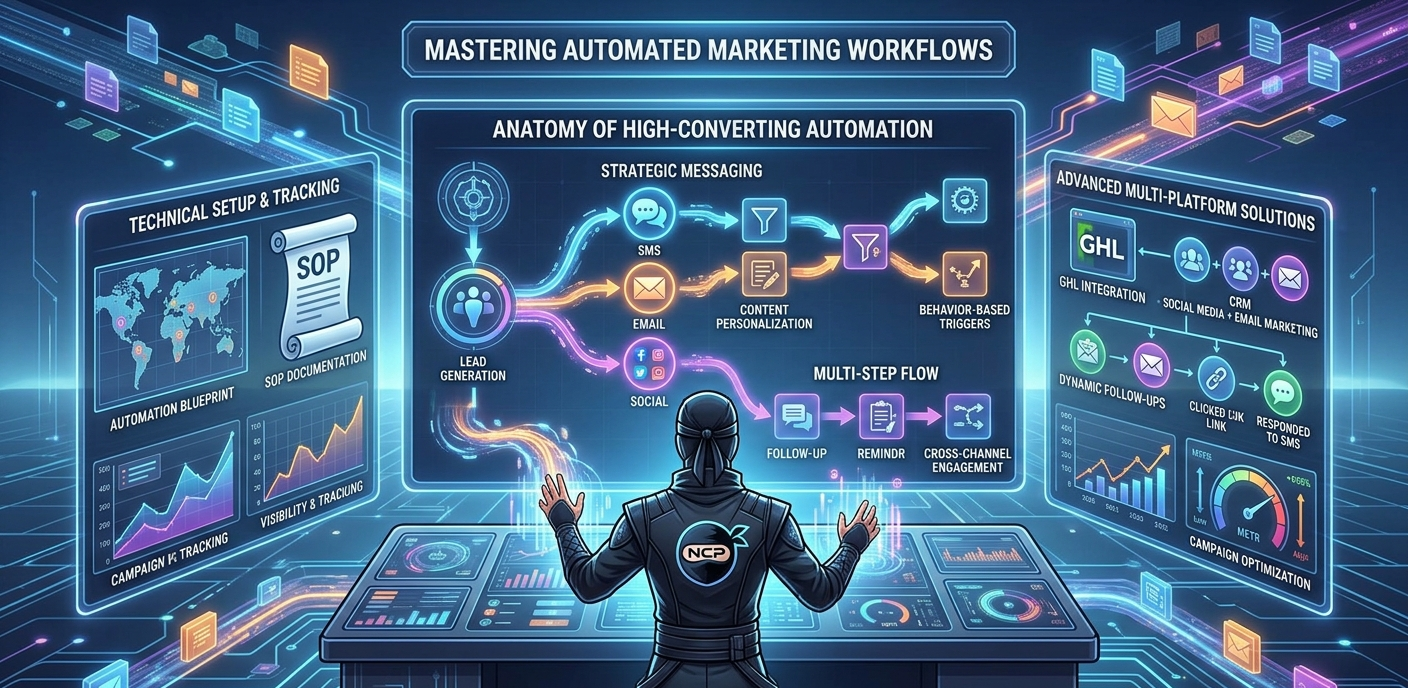
1. The Anatomy of High-Converting Automation
The most common mistake marketers make is overlooking the flow. Campaigns may run, but if the messaging isn’t strategic, results suffer.
Automated Messaging Alignment: Each SMS, email, or social message must align with your campaign objective. Sending promotional content to a lead in a verification workflow reduces engagement and increases opt-outs.
Content Personalization: Automation isn’t just scheduling—it’s delivering dynamic, relevant content. Insert lead names, preferences, or behavior-based triggers to make messages resonate.
Multi-Step Workflows: A single message rarely drives conversion. Successful campaigns rely on sequence planning, including follow-ups, reminders, and cross-channel engagement (SMS + Email + Social).
2. Technical Setup: Planning and Tracking Campaigns
Effective automation begins with visibility and documentation.
SOP Documentation: Every workflow should have a Standard Operating Procedure (SOP) documenting triggers, actions, delays, and expected outcomes. This prevents errors and allows team members to scale campaigns consistently.
Blueprint Tracking: Use a visual automation map to track multi-step sequences. For GHL users, connecting workflows to CRM, email, and social platforms ensures each lead is nurtured without redundancy.
High-Level Strategy: Before building automation, define goal-based tasks—lead scoring, follow-up sequences, or sales triggers. Automation without purpose is just activity; purposeful automation drives ROI.
3. Advanced Solutions for Multi-Platform Automation
To maximize efficiency and results, automation should extend across channels and integrate with other systems.
Cross-Platform Workflows: Connect GHL with CRM tools, email marketing platforms, and social channels to maintain consistent messaging across touchpoints.
Dynamic Follow-Ups: Automatically adjust messaging sequences based on lead behavior—opened email, clicked link, or responded to SMS—to increase engagement.
Campaign Optimization: Monitor performance metrics for each step: open rates, click-throughs, and conversion percentages. Adjust sequences using data-driven insights to continually improve ROI.
Automation Troubleshooting Mindset
| Failure Point | Beginner Approach | Pro Developer Approach |
|---|---|---|
| Leads unresponsive | Send more messages | Analyze sequence timing, content relevance, and lead scoring |
| Low engagement | Change template | Use behavior-based triggers and A/B test messaging |
| Workflow errors | Rebuild workflow | Audit automation logs, check API/CRM integration, and validate triggers |
| Multi-platform disconnect | Focus on one channel | Map all touchpoints, ensure CRM + GHL + Email + Social sync |
Conclusion: Automation Is Strategy, Not Just Execution
In modern marketing, automation is more than sending messages—it’s building relationships at scale. By mastering multi-step workflows, cross-platform sequences, and goal-driven campaigns, you ensure that every lead receives the right message, at the right time, on the right channel.
At Ninja Coding Pro, we craft automation systems that are strategic, compliant, and optimized for conversion, turning passive leads into engaged customers.


Comments (0)