 Info@ninjacodingpro.com
 ninjacodingpro
 +92 315 6421641
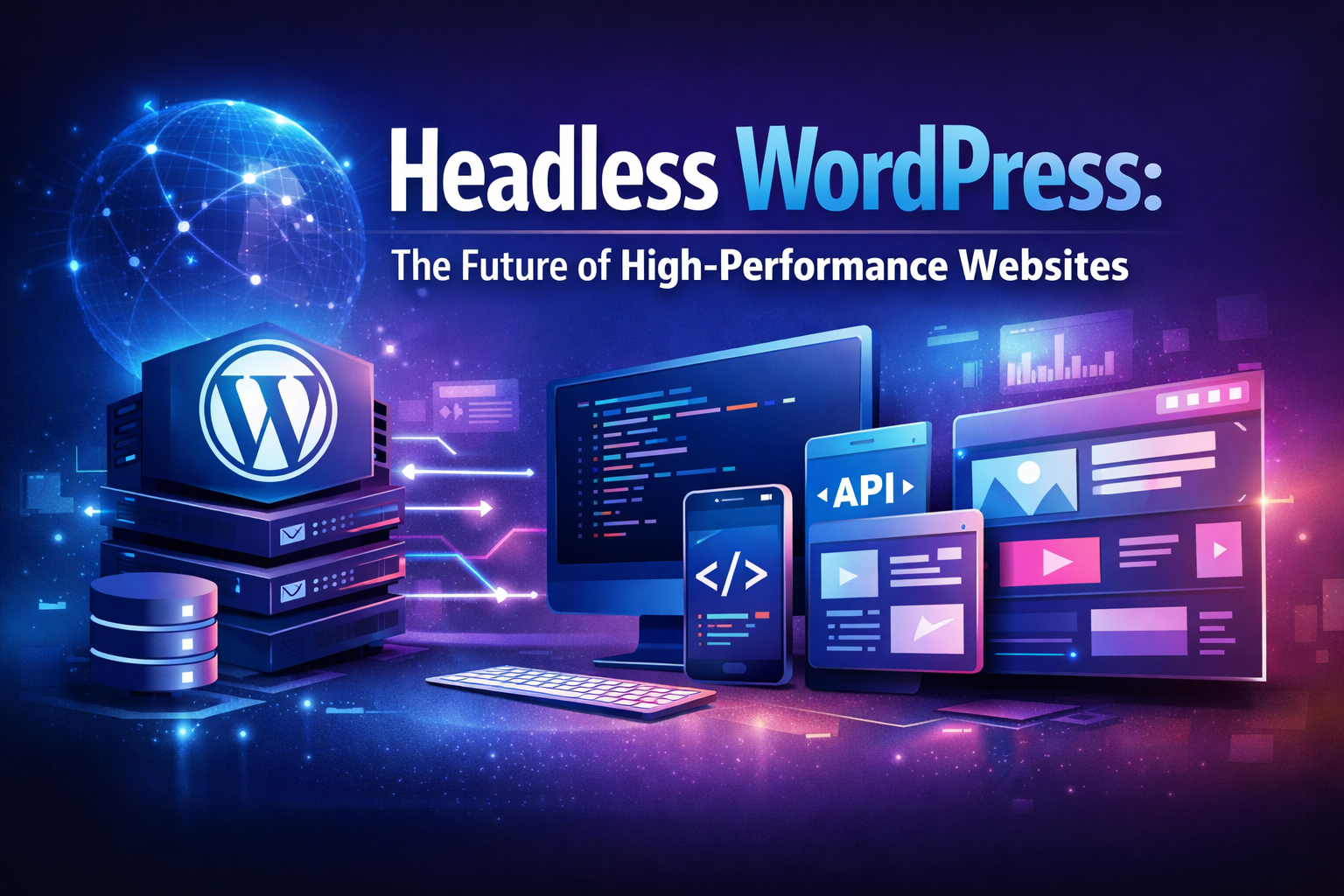
In 2026, website performance is no longer just a technical metric—it directly impacts SEO rankings, user experience, and business revenue. Traditional WordPress websites are powerful and flexible, but as digital platforms demand faster speeds, omnichannel content delivery, and modern user interfaces, a new architecture is rapidly gaining popularity: Headless WordPress.
Headless WordPress separates the content management system (CMS) from the frontend presentation layer, allowing developers to build high-performance interfaces using modern frameworks such as React, Next.js, or Vue.js, while still managing content through WordPress.
At Ninja Coding Pro, we implement headless WordPress solutions that combine the reliability of WordPress with the performance of modern web technologies—creating websites that are fast, scalable, and ready for the future.
1. Understanding the Headless WordPress Architecture
Traditional WordPress operates as a monolithic system, where the backend (content management) and frontend (themes/templates) are tightly connected.
Headless WordPress breaks this connection and introduces a decoupled architecture:
- WordPress Backend – Used purely as a content management system.
- API Layer – Content is delivered through REST API or GraphQL.
- Frontend Framework – Built using modern technologies like React, Next.js, Vue, or Gatsby.
This separation allows developers to create highly optimized user interfaces while maintaining WordPress as the content hub.
With headless architecture, the same content can power multiple platforms, including:
- Websites
- Mobile applications
- Progressive Web Apps (PWAs)
- Digital displays or smart devices
This approach transforms WordPress into a centralized content engine.
2. Performance Benefits of Headless WordPress
One of the biggest reasons businesses adopt headless WordPress is performance optimization.
Traditional WordPress relies heavily on server-side rendering, plugins, and PHP processing, which can slow down page load times when traffic increases.
Headless architecture improves performance by:
- Static Site Generation – Frameworks like Next.js pre-build pages for faster delivery.
- Reduced Server Load – Content is fetched via APIs instead of dynamic page rendering.
- Optimized Frontend Delivery – Modern frameworks handle efficient JavaScript rendering and caching.
As a result, businesses experience:
- Faster page load speeds
- Improved Core Web Vitals
- Higher SEO rankings
- Better user engagement and conversions
For high-traffic websites, this can dramatically improve site performance and scalability.
3. Developer Flexibility with Modern Frameworks
Headless WordPress gives developers complete freedom to build custom frontends using modern development tools.
Instead of being limited by traditional WordPress themes, developers can use frameworks such as:
- React
- Next.js
- Vue.js
- Nuxt.js
- Gatsby
This allows teams to create highly interactive, dynamic, and visually advanced websites.
Key advantages include:
- Advanced UI/UX design capabilities
- Faster frontend performance
- Scalable code architecture
- Seamless integration with modern APIs and services
For businesses building complex digital platforms, this flexibility is invaluable.
4. Multi-Channel Content Delivery
One of the most powerful capabilities of headless WordPress is omnichannel content distribution.
Because content is delivered through APIs, it can be reused across multiple digital platforms without duplication.
For example, a single WordPress dashboard can manage content for:
- Corporate websites
- Mobile applications
- E-commerce platforms
- Marketing landing pages
- Smart devices or digital displays
This centralized approach improves content management efficiency and ensures consistent branding across platforms.
5. Challenges and Considerations
Although headless WordPress offers significant advantages, businesses should also understand the technical considerations.
Some challenges include:
- More complex development setup
- Higher initial development investment
- Need for modern JavaScript expertise
- Limited compatibility with certain WordPress plugins
However, when implemented by experienced developers, these challenges are easily managed and outweighed by the performance and scalability benefits.
Traditional WordPress vs Headless WordPress
| Feature | Traditional WordPress | Headless WordPress |
|---|---|---|
| Architecture | Monolithic | Decoupled |
| Frontend | WordPress themes | React, Next.js, Vue |
| Performance | Moderate | High-performance |
| Scalability | Limited | Highly scalable |
| Content Delivery | Single website | Multi-platform (web, apps, devices) |
Conclusion: The Next Evolution of Word Development
Headless WordPress represents the next evolution of modern web architecture. By separating content management from the frontend experience, businesses gain the ability to build faster, more scalable, and future-ready digital platforms.
For organizations focused on performance, advanced user experiences, and multi-platform content delivery, headless architecture is quickly becoming the preferred development strategy.
At Ninja Coding Pro, we specialize in building high-performance headless WordPress solutions that combine the flexibility of WordPress with the speed of modern frontend technologies—ensuring your website is optimized for growth, scalability, and long-term success.



Comments (0)