 Info@ninjacodingpro.com
 ninjacodingpro
 +92 315 6421641
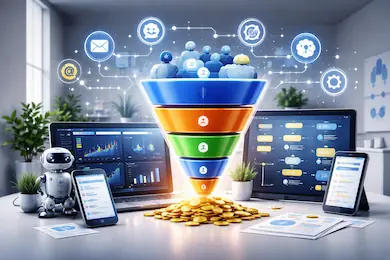
In 2026, the biggest misconception in digital marketing is that more traffic equals more revenue. In reality, most businesses are already generating enough traffic—the real problem lies in a broken sales funnel that fails to convert attention into action.
A modern sales funnel is no longer a simple sequence of pages; it is a data-driven, AI-powered ecosystem where every interaction is tracked, optimized, and automated. When even one layer of this system is misaligned—whether it’s messaging, timing, or follow-up—the entire funnel underperforms.
We don’t just optimize funnels—we re-engineer them into intelligent conversion systems designed to maximize every single lead opportunity.
1. The Hidden Failure Points Inside Modern Funnels
Most funnel issues are not visible at the surface level. A funnel may appear functional, but internally it suffers from conversion friction, data gaps, and automation failures.
The most common failure points include:
- Misalignment between ad messaging and landing page content
- Slow-loading or poorly optimized landing pages
- Weak or unclear call-to-action (CTA)
- Lack of immediate follow-up after lead capture
- No behavioral tracking or user segmentation
The real issue is not just technical—it’s strategic. When user intent is not matched with a seamless experience, the funnel loses its ability to convert effectively.
2. Rebuilding the Funnel as a Connected System
A professional funnel is not built in isolation; it is designed as a fully connected architecture where frontend experiences and backend systems work in perfect synchronization.
To rebuild an effective funnel, businesses must focus on:
- Seamless integration between landing pages and CRM
- Real-time data capture and lead tracking
- Consistent messaging across all funnel stages
- Fast, mobile-optimized user experiences
- Clear and compelling value propositions
When properly structured, the funnel behaves like a real-time conversion engine, ensuring that no lead is lost due to delays or disconnection.
3. Leveraging AI to Close Conversion Gaps
Artificial Intelligence has transformed funnels from static pathways into adaptive systems that respond to user behavior.
Modern AI-driven funnels include:
- Automated email and SMS follow-ups based on user actions
- Smart chatbots that qualify and engage leads instantly
- Personalized messaging tailored to user behavior
- Predictive triggers that re-engage inactive leads
This allows businesses to create a highly responsive funnel, where leads are nurtured intelligently instead of being left unattended.
4. Automation as a Conversion Multiplier
Automation is not just about saving time—it is about creating consistency and scalability within your funnel.
Key automation elements include:
- Multi-step follow-up sequences
- Lead tagging and segmentation
- Pipeline movement based on user behavior
- Event-based triggers and actions
- Automated notifications for sales teams
With automation in place, the funnel transforms into a self-operating system that continues to perform without constant manual input.
5. Data Intelligence and Continuous Optimization
A modern funnel evolves through data-driven decision-making. Without analytics, optimization becomes guesswork.
Critical data points to monitor include:
- Conversion rates at each funnel stage
- User behavior and interaction patterns
- Drop-off points within the funnel
- Engagement rates across channels
- Performance of different offers and messaging
By continuously analyzing and improving these metrics, businesses can turn an average funnel into a high-performance conversion system.
Funnel Optimization Mindset: Beginner vs Professional
| Challenge | Beginner Approach | Professional Approach |
|---|---|---|
| Low Conversions | Increase traffic volume | Diagnose and eliminate conversion friction |
| Lead Drop-Off | Ignore or guess | Analyze behavior and fix funnel gaps |
| Follow-Ups | Manual and inconsistent | AI-driven, behavior-based automation |
| Funnel Design | Static pages | Dynamic, adaptive system architecture |
| Growth Strategy | Short-term fixes | Continuous data-driven optimization |
A truly optimized funnel is not defined by how it looks, but by how intelligently it responds to user behavior. Professional systems are built with a deep understanding of conversion psychology, automation logic, and data feedback loops, ensuring that every stage contributes to measurable growth rather than passive engagement.
Conclusion: From Broken Funnel to Intelligent Growth Engine
A broken funnel is not a failure—it is an opportunity to rebuild your system the right way. In today’s digital landscape, success depends on how effectively your funnel can capture attention, sustain engagement, and convert intent into action.
By integrating AI, automation, and data intelligence, businesses can transform traditional funnels into high-performance growth engines that operate with precision and scalability.
At Ninja Coding Pro, we design funnels that don’t just function—they think, adapt, and convert, ensuring your business is always moving toward growth, efficiency, and long-term success.




Comments (0)